
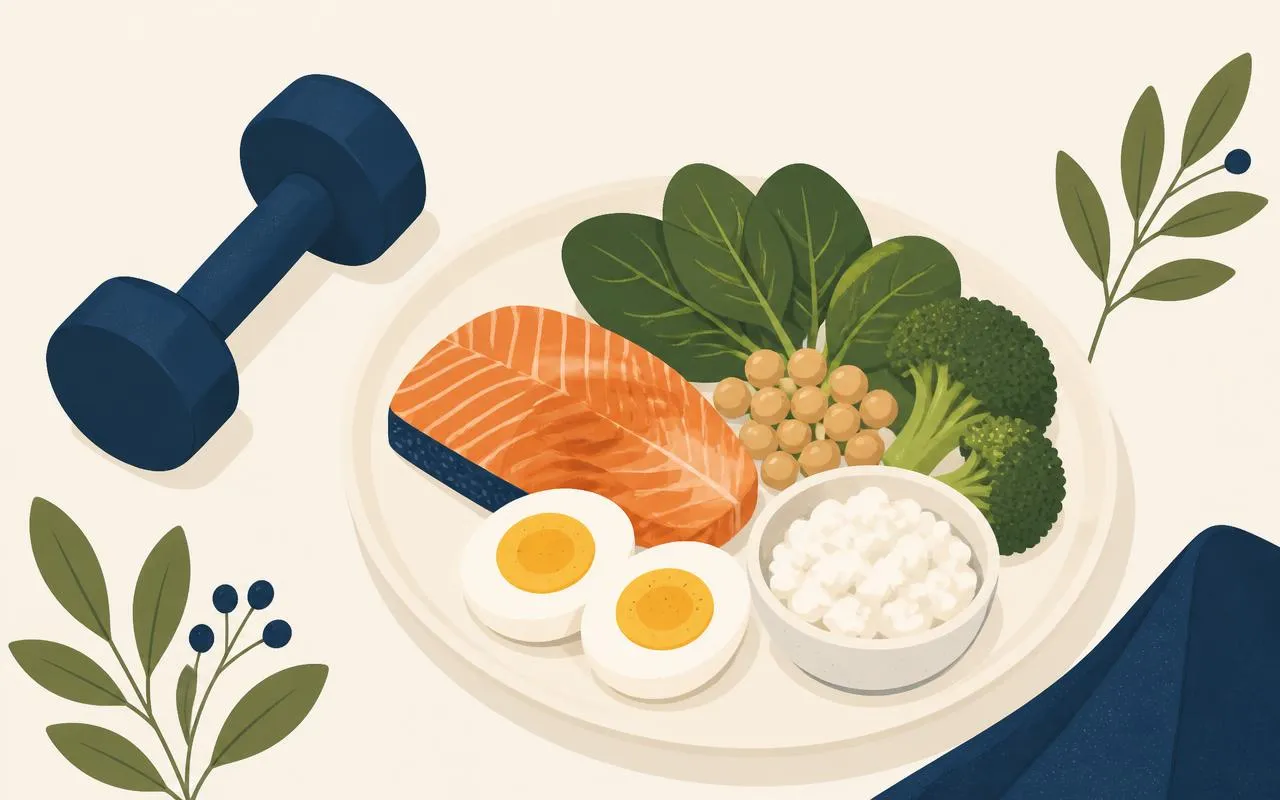
You've committed to strength training. You're showing up, lifting weights, doing the work. But somehow, the muscle gains aren't coming as quickly as you'd hoped. If you're over 55, the missing piece often isn't your workout—it's what's on your plate.
Building muscle after 55 requires a strategic nutrition approach that prioritizes higher protein intake (1.0–1.2 grams per kilogram of body weight daily), evenly distributed across meals, combined with adequate calories and nutrient timing around workouts. Without this foundation, even the best strength training program can't deliver the results your body is capable of achieving.
At Everybitfit in Scottsdale, our trainers work with adults 55+ every day who discover that integrated nutritional coaching transforms their results. This guide covers the science behind muscle-building nutrition for older adults, practical meal strategies you can start today, and how personalized guidance makes the difference between spinning your wheels and building real strength.
The Science: Why Nutrition Matters More After 55
Your body at 60 doesn't respond to food the same way it did at 30. Understanding these changes isn't discouraging—it's empowering. Once you know what's happening, you can adjust your approach and get results.
Anabolic resistance is the primary challenge. As we age, our muscles become less responsive to the muscle-building signals that protein provides. Research published in the Journal of Nutrition, Health & Aging shows that older adults need approximately 25–40% more protein per meal to trigger the same muscle protein synthesis response as younger adults.
This means the protein recommendations designed for 25-year-olds simply don't apply to you. The standard RDA of 0.8 grams per kilogram of body weight was established to prevent deficiency—not to optimize muscle building. For active older adults engaged in strength training, research from the American College of Sports Medicine supports protein intakes of 1.0–1.2 grams per kilogram daily, with some studies suggesting even higher amounts for those recovering from illness or injury.
Sarcopenia—the age-related loss of muscle mass—begins as early as age 30, with losses accelerating after 60. Adults can lose 3–8% of muscle mass per decade without intervention. But here's the encouraging truth: sarcopenia is not inevitable. Strategic nutrition combined with resistance training can slow, halt, or even reverse muscle loss well into your 70s, 80s, and beyond.
The digestive changes that come with aging also matter. Reduced stomach acid production, slower gastric emptying, and changes in appetite hormones all affect how efficiently you absorb and utilize nutrients. This is why nutrient density—choosing foods that pack maximum nutrition per calorie—becomes increasingly important.
How Everybitfit Builds Nutrition Into Your Training
Generic diet advice fails older adults because it ignores the individual factors that determine success: your current muscle mass, your activity level, your health conditions, your medication interactions, and your personal food preferences. A 65-year-old managing osteoporosis and taking blood pressure medication has completely different nutritional needs than a 58-year-old focused on weight management.
At Everybitfit, nutritional coaching comes integrated with every training program—not as an expensive add-on, but as a fundamental component of your results. Our Scottsdale trainers recognize that you can't out-train a poor diet, especially when building muscle is the goal.
During your initial consultation, we assess not just your fitness level but your eating patterns, your relationship with food, and the practical constraints of your lifestyle. Do you cook at home or rely on prepared meals? Are you managing diabetes or digestive issues? Do you take GLP-1 medications that affect appetite? All of these factors shape the nutritional guidance you receive.
For clients on GLP-1 medications like Ozempic, Wegovy, or Mounjaro, protein becomes even more critical. These medications can reduce appetite significantly, making it challenging to consume adequate protein without intentional planning. Our trainers help you prioritize protein-rich foods within your reduced calorie intake to preserve the muscle mass you're working to build.
The private studio environment means these conversations happen naturally, without embarrassment. There's no one overhearing your questions about portion sizes or watching you write in a food journal. It's just you and your trainer, problem-solving together.
Ready to see what personalized training and nutrition coaching feels like? Claim your Fitness Strategy + Workout—5 private sessions to experience the difference. No contract, 30-day money-back guarantee. Call (602) 743-6867 to get started.
Practical Nutrition Strategies You Can Start Today
Knowledge without action is just trivia. Here are specific, implementable strategies for building muscle through nutrition after 55:
1. Front-Load Your Protein
Most Americans eat a protein-light breakfast, a moderate lunch, and a protein-heavy dinner. For muscle building, this pattern is backwards. Your muscles are most responsive to protein in the morning after the overnight fast. Aim for 25–30 grams of protein at breakfast—roughly equivalent to 4 eggs, a cup of Greek yogurt with nuts, or a protein smoothie with whey powder.
This is exactly the kind of meal restructuring our trainers discuss during Active Adults and Seniors sessions. Small changes to breakfast habits often produce noticeable energy improvements within the first week.
2. Distribute Protein Across All Meals
Your body can only use so much protein at once for muscle building—roughly 25–40 grams per meal for most older adults. Eating 80 grams of protein at dinner and 10 grams the rest of the day wastes muscle-building potential. Instead, aim for 25–35 grams at each of three meals, plus a protein-rich snack if needed.
Sample protein targets per meal:
- Breakfast: 25–30g (Greek yogurt parfait with nuts, or eggs with cheese and turkey sausage)
- Lunch: 30–35g (grilled chicken salad, or salmon with quinoa)
- Dinner: 30–35g (lean beef, pork tenderloin, or fish with vegetables)
- Snack: 10–15g (cottage cheese, protein shake, or handful of nuts with cheese)
3. Time Protein Around Your Workouts
Consuming protein within 2 hours after strength training enhances muscle protein synthesis. This doesn't require complicated timing or expensive supplements—a regular meal or a simple protein shake works perfectly. The key is having a plan so you don't leave the gym and skip eating for hours.
4. Choose Leucine-Rich Protein Sources
Leucine is an amino acid that directly triggers muscle protein synthesis. Older adults need approximately 2.5–3 grams of leucine per meal to maximize this signal. The richest sources include whey protein, eggs, chicken, beef, fish, and dairy products. Plant proteins like beans and lentils are valuable but contain less leucine per serving—you'll need larger portions or combinations to hit the threshold.
5. Don't Fear Calories—Fear Inadequate Calories
Many older adults undereat, either intentionally (trying to lose weight) or unintentionally (reduced appetite, medications, dental issues). Building muscle requires adequate energy. If you're in a significant calorie deficit, your body will break down muscle for fuel regardless of your protein intake. For muscle building, aim for a slight calorie surplus or at minimum, maintenance calories on training days.
Check out our Diets & Recipes page for protein-rich meal ideas designed for active older adults.
What Role Does Protein Timing Play in Muscle Building After 50?
Protein timing matters, but not as much as total daily protein intake. Research shows that consuming protein within a 2-hour window after resistance training provides a modest benefit for muscle protein synthesis. However, the biggest factor is consistently hitting your daily protein target—spreading intake evenly across meals matters more than obsessing over exact post-workout timing.
For Everybitfit clients, we simplify this: eat a protein-rich meal within a couple hours of training, and focus on getting enough throughout the day. Overcomplicating nutrition leads to paralysis—and skipped meals.
Can I Build Muscle After 60 Without Supplements?
Absolutely. Supplements are exactly what the name implies—supplemental to a solid food-based diet. Whole foods provide protein along with vitamins, minerals, fiber, and other compounds that isolated supplements cannot replicate. A 65-year-old eating adequate protein from eggs, fish, poultry, dairy, and lean meats does not require protein powder to build muscle.
That said, protein supplements can be practical tools for older adults with reduced appetite, digestive challenges, or difficulty chewing. A whey protein shake is often easier to consume than a large chicken breast. Our Scottsdale personal trainers help clients identify when supplements make sense and when they're unnecessary expenses.
How Much Protein Do Seniors Need Daily for Muscle Maintenance?
For muscle maintenance (not loss), older adults need approximately 1.0 grams of protein per kilogram of body weight daily. For active muscle building during a strength training program, aim for 1.0–1.2 grams per kilogram. A 160-pound (73 kg) person would target 73–88 grams of protein daily for muscle-building goals.
These numbers can feel abstract. In practical terms, that's roughly a palm-sized portion of protein at each meal plus a protein-rich snack. Our trainers at Everybitfit translate the science into meal-by-meal guidance that fits your actual eating habits and food preferences.
Your Nutrition Foundation for Lasting Strength
Building muscle after 55 isn't about extreme diets or complicated supplement protocols. It's about consistent, adequate protein intake distributed throughout the day, combined with enough calories to fuel your training and enough resistance exercise to stimulate growth. The science is clear. The application is where most people struggle—and where personalized coaching makes the difference.
At Everybitfit, we don't separate training from nutrition because your body doesn't separate them either. What you eat determines what you can build. Our Scottsdale trainers have worked with adults in their 60s, 70s, and 80s who gained measurable strength and muscle by following these principles consistently.
Ready to build the strength you deserve? Call (602) 743-6867 or claim your Fitness Strategy + Workout—5 private training sessions with integrated nutritional guidance, no contract, and a 30-day money-back guarantee. Your first workout and consultation are free. Come see what's possible.